London to Cambridge Day Trip: King's Cross vs. Liverpool Street, Which Ticket to Buy, and What to Do If You're Running Late
Updated 2026-07-18 · Guide Zaizai
"King's Cross is faster" is only half the story. For a London-to-Cambridge day trip, you're taking the train either way — but London has two stations that run to Cambridge, and picking the wrong one, or the wrong ticket, matters more than the few minutes' difference in journey time. If you're staying in the City or east London, getting to King's Cross in the first place can easily cost you twenty or thirty minutes of London-side travel, handing back whatever time the express train saved before you've even boarded. And locking in a cheap Advance return to save a few pounds can just as easily force you to head back to the station while it's still light out. Here's the trip in four steps: which station to leave from, which ticket to buy and where, how to plan your timing for the day, and what to do first if something goes wrong.
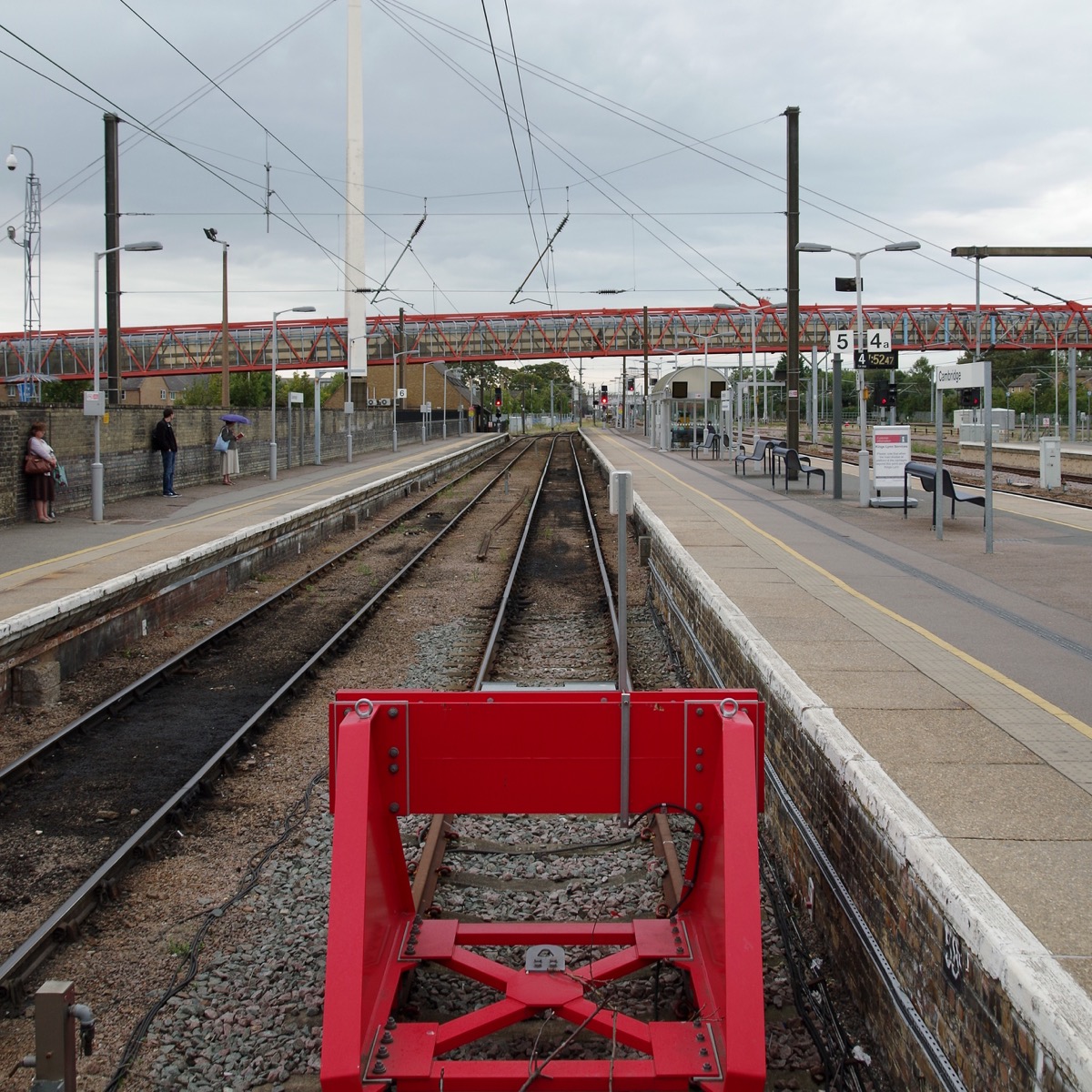
Step 1: Which station to leave from — King's Cross or Liverpool Street
Here's how to decide: open a map app — Google Maps or Citymapper both work — and search how long it takes from your hotel or Airbnb to each station, on foot or by Tube. Whichever is clearly faster or needs fewer changes is the one to book.
- Near King's Cross, Euston or Bloomsbury, or anywhere with an easy Tube connection onto the Piccadilly, Victoria or Northern lines: go to King's Cross (KGX) and take Great Northern.
- In the City, Shoreditch, east London, or anywhere already on the Elizabeth line, Central, Circle, Hammersmith & City or Metropolitan lines straight into Liverpool Street: go to Liverpool Street (LST) and take Greater Anglia — even if the train itself takes a few minutes longer, your door-to-door time may well be shorter.
(If those neighbourhood names don't mean much to you yet: King's Cross sits north of central London, near Euston and St Pancras. Liverpool Street sits east of central London, right on the edge of the City and Shoreditch — "the City" here means London's financial district, the small patch around Liverpool Street station, not "the city" in the general sense.)
Both stations run direct trains to the same place: Cambridge (CBG). When you search fares or check a journey planner (the train-search tool on National Rail's site or app), make sure that's the code you're booking — not Cambridge North or Cambridge South, which aren't where you want to get off for a day trip into the city centre.
Roughly how long each route takes, just so you have a sense of it:
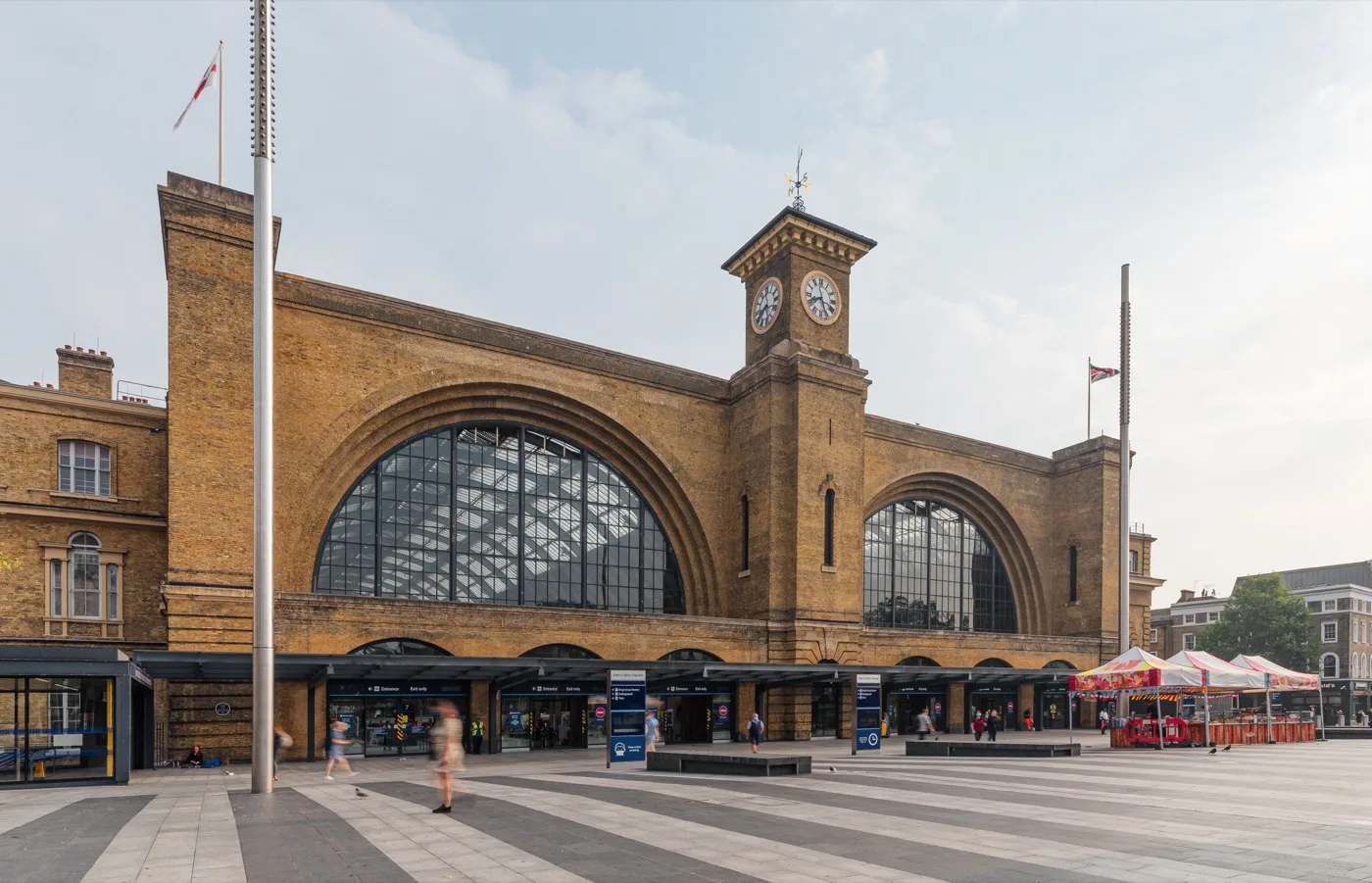
- King's Cross / Great Northern: the operator's site advertises direct trains running all day, somewhere in the region of 60-plus services a day, with an average journey of about 1 hour 6 minutes and the fastest services around 50 minutes. Treat "50 minutes" as a reference point, not a guarantee — not every service is the fast one, so check the journey planner before you book that a given train is actually direct.
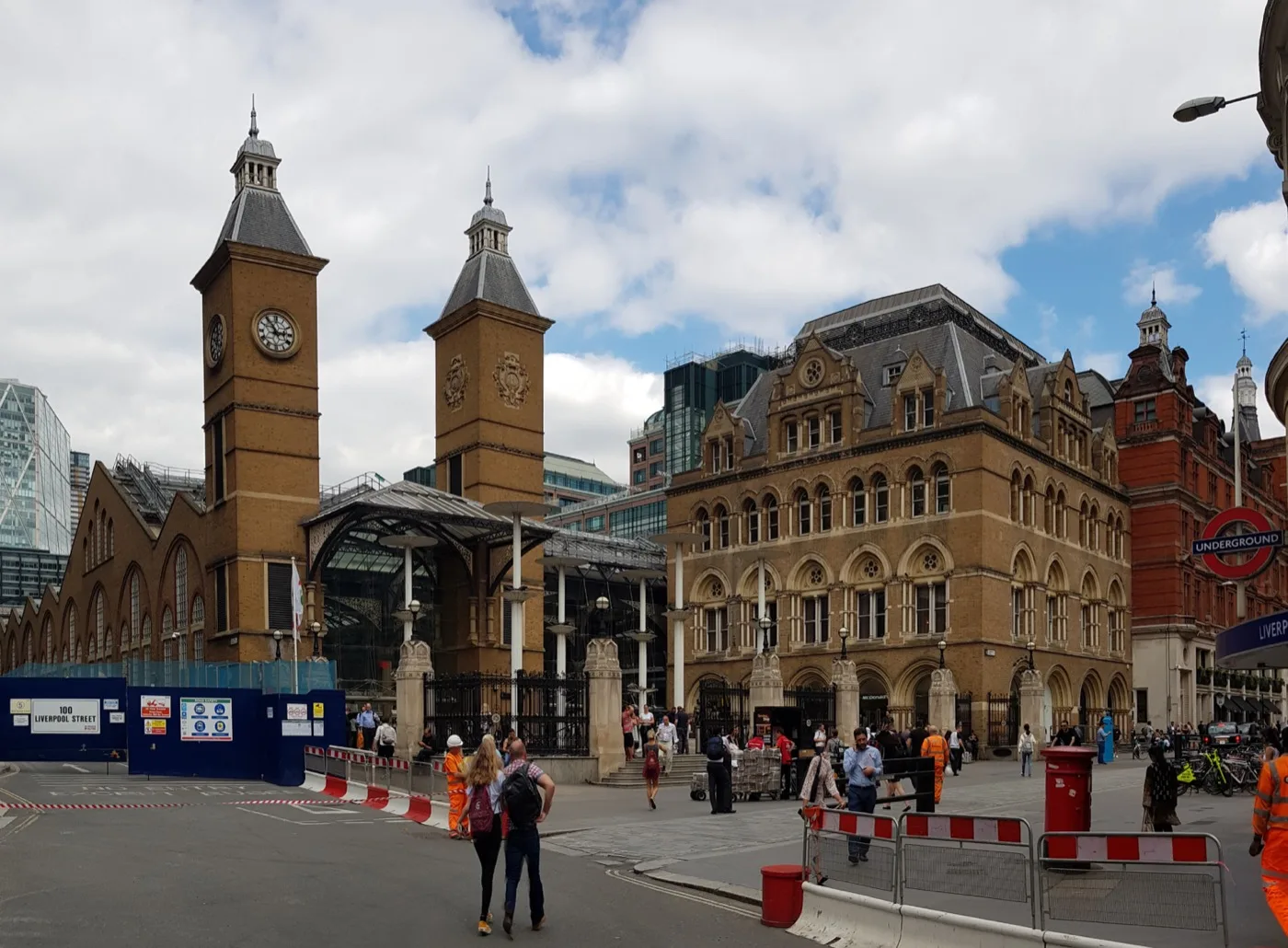
- Liverpool Street / Greater Anglia: also runs an official direct route, typically a bit slower than the King's Cross express. For the exact journey time, frequency and first/last services, check National Rail or the Greater Anglia site directly on the day you're travelling — a screenshot of "X minutes" floating around online was somebody else's result for one specific service on one specific day, not necessarily yours.
For a more precise comparison, break the trip into four legs and work it out yourself: hotel to the London station (the same map-app search), buffer time to find the platform, the train itself, and CBG to your first stop in Cambridge. The 20 minutes an express train saves can easily get eaten up by an extra change or a 25-minute walk on the London end. Here's how: on National Rail, using the same travel date, passenger count and Railcard, search KGX -> CBG and LST -> CBG separately, note all four legs for each, and decide from there — not from whichever number shows up first in the results.
Step 2: Which ticket to buy, where to buy it, and roughly how much it costs
Find your situation below and go with it:
- You know what time you're leaving, and you won't be tempted to sleep in or change plans → buy Advance. Usually the cheapest of the three, but tied to a specific date and service — once that train's gone, it can't be changed, and it's generally non-refundable. Changing before you travel costs up to £10 per ticket plus any fare difference. Being tied to a service isn't the same as having an assigned seat; whether seat selection is offered depends on the route. If you haven't decided when you're coming back, don't lock yourself into a return just to save a few pounds.
- You haven't decided when you're heading back — maybe you want to catch the sunset or finish up at the market first → buy Off-Peak. Usually a bit pricier than Advance, but any eligible service on the day works, no need to commit to a specific train. Weekday restrictions vary by route and by the ticket itself, so don't guess from the clock — check the restriction code (the fare's fine print) on the ticket or the journey planner. An Off-Peak Day ticket requires you to complete your journey by 04:29 the next day — that's not a guarantee a late-night train exists, so check the actual return times separately.
- You're deciding on the day, or you just want zero restrictions → buy Anytime. Usually the most expensive of the three, but genuinely flexible on timing. "Travel anytime" doesn't mean "any London station, any operator" though — the route and operator restrictions printed on the ticket still apply.
One rule applies across all three: if a ticket specifies an operator, route or particular service, you're bound by that; anything not specified is still governed by time restrictions and whatever route the journey planner counts as valid. Screenshot your full itinerary after booking, and check the Route, Valid only on and operator fields on the ticket — don't assume you can switch from King's Cross to Liverpool Street on the day just because "it's still London to Cambridge." The two routes don't automatically accept each other's tickets.
Where to buy: National Rail's own site or app, third-party platforms like Trainline, or the station's ticket machines and windows all sell the same tickets. Refunds and changes go through whichever channel you bought from, so keep your booking confirmation. Sort out collection too: an e-ticket is usually a QR code or barcode on your phone, scanned straight at the gate; a paper ticket needs collecting from a station machine or window first. Either way, check your phone's charged or your paper ticket's in hand before you reach the barrier.
How far ahead do you need to book: Advance tickets go on sale as early as 12 weeks out, and some services are still bookable as late as 10 minutes before departure — once you know your date and train, you can book any time in between, no need to wait until the last minute. Off-Peak and Anytime aren't tied to that sales window at all; you can buy them at the station on the day and still make your train. Short version: if your date's fixed, book Advance early; if it's not, Off-Peak or Anytime once you've decided is still plenty of time.
Roughly how much it costs: there's no fixed price across the three ticket types — the actual number only shows up when you check the journey planner or book on the site, and it moves with the date, the specific train, and whether you're applying a Railcard. As a rule of thumb, Advance costs less than Off-Peak, which costs less than Anytime. Pull up all three before you decide rather than going in with a rough number in your head.
If you're holding a Railcard, or travelling as a group, there's more to save: a Railcard is a discount pass you buy separately — adding the cardholder as a passenger unlocks the cheaper fare, but the card itself isn't a ticket. Eligible fares typically save up to a third, but the real discount depends on the card and ticket combination — it's not a flat rule. For whether it's worth buying as a visitor and which card to pick, see our UK train ticket savings guide — what's below covers just what matters for this trip:
- Two Together Railcard: both cardholders need to travel together the whole way; usable from 09:30 on weekdays, and all day on weekends and bank holidays.
- 16–25 Railcard and 26–30 Railcard: both apply a weekday morning minimum fare (around £12, Advance excluded), but summer rules differ — the 16–25 card's minimum-fare rule doesn't apply in July and August, while the 26–30 card's official page gives no such exemption. Don't assume the two cards follow the same rule in summer.
- Travelling as a group of 3–9 adults: check Great Northern's GroupSave separately — eligible Off-Peak journeys save a third, but it's a distinct discount, so don't assume it stacks with a Railcard.
- Using a digital Railcard: keep your phone charged and ready to show — the discounted ticket and a valid Railcard both need to be presented together.
- A sensible order to check prices: get a baseline total with no Railcard applied, then add whichever Railcard you actually hold and re-check, paying particular attention to minimum-fare rules on early trains. Travelling as a group, test GroupSave separately. Finally, weigh the cost of the card itself against what this specific trip saves — don't buy one just because a page says "save up to a third."
One more thing worth knowing: a Railcard is a discount pass, not a tap-in-tap-out travel card — this leg counts as a National Rail long-distance journey, so you can't just tap an Oyster card or phone contactless the way you would on the Tube, and TfL's daily capping doesn't carry over here. Check what your payment method actually covers before you travel.
Step 3: Timing an early-out, late-back day
If you have a time-specific booking in the morning — a guided tour, a timed ticket — don't treat the advertised journey time as your arrival time. Finding the platform and the wait before boarding both eat into your morning, and Great Northern doesn't offer seat reservations, so arrive early during busy periods, more so if you're carrying luggage. Give your first booking a 30–45 minute margin rather than cutting it fine.
In the afternoon, pick a time — around 16:00 works well — to check both routes' service status on National Rail's Status and Disruptions page or the relevant operator's app, then check again before you leave your last stop of the day. Engineering work and cancellations are often updated same-day or even last-minute, so whatever you checked that morning doesn't substitute for a check right before you head back.
For the evening, keep three points in mind rather than just one "last train":
- The plan: whichever train you can realistically catch once the day wraps up normally — build dinner and your last stop around this one.
- The backup: roughly one service later than the plan, still early enough to make it back to where you're staying or catch the last Tube home.
- The last resort: an emergency fallback only, never something to plan around — ideally your planned return sits at least two services before the actual last train. Treating the last service of the night as the plan is exactly what causes most late-night trouble: a cancellation, or just running a little late yourself, leaves no natural buffer.
Check the actual times for these three on the journey planner on the day you travel — last-train times shift by date and season, so don't reuse a "last train is at X" you saw somewhere online.

If you need accessibility assistance, KGX, LST and CBG are all currently listed as step-free (no stairs needed to reach the platform), though lifts can go out of order without notice. Contact Passenger Assist — the stations' assistance-booking service — ahead of time, and separately confirm whether any engineering-work replacement buses can accommodate your needs.
Step 4: If your train back is delayed or cancelled
The moment you find out about a cancellation or major delay, do this first: find Cambridge station staff, or contact the operator directly, and explain that you're holding a valid ticket and need to complete your journey to London. Ask specifically about the next available service, whether another operator's trains will be accepted, any replacement buses, whether a taxi is authorised, or whether accommodation will be arranged. Don't pay for an expensive taxi out of your own pocket before staff confirm it — that cost isn't guaranteed to be reimbursed. Keep screenshots of station screens, app notifications, announcement text, chat logs and every receipt; you'll need them for a refund or compensation claim afterwards.
It's worth being clear on where the operator's responsibility actually starts and stops: if a rail disruption leaves a ticket-holder unable to complete their journey, the operator is obliged to arrange alternative transport where reasonably practicable, and accommodation if necessary. But that obligation is specifically about disruption preventing completion of the journey — it doesn't extend to you personally staying out too late in Cambridge and missing the services you'd planned around. The line is straightforward: disruption is the operator's problem, running late is yours.
Refund or Delay Repay (delay compensation) — which one you want depends on your situation:
- If you've decided not to travel: claim a refund on the unused ticket from wherever you bought it, usually fee-free.
- If you travelled but arrived late: claim Delay Repay from whichever operator caused the delay. Great Northern, for example, accepts claims for arrivals 15 minutes or more behind schedule, submitted within 28 days of the affected journey, with proof of travel kept on hand. Other operators' thresholds and claim channels differ, so check the specifics before you travel.
Once you're actually in Cambridge, how to spend the day runs on a completely different set of rules — getting into the colleges, walking the Backs, where to find the best photo spots. See our Cambridge day trip walking route guide for that part, and if punting on the Cam is on your list, our Cambridge punting guide is worth a look too. The transport question, in the end, comes down to picking the right station, buying the right ticket, building in enough buffer, and knowing who to ask if something goes wrong — that's worth far more than remembering a single headline number like "50 minutes."
Journey times, fares and service details above reflect official information at the time of writing — check Great Northern, Greater Anglia and National Rail's own sites on the day you travel.

Zaizai
UK Museum Guide